AI Dog Images vs. Cute Dogs and Funny Pet Creatives – Which One Wins in Pet Marketing?
The Battle for Clicks and Awws
Marketers love a good debate—SEO vs. PPC, short-form vs. long-form content, and now, AI dog images vs. real cute and funny pet creatives. It’s the age-old question: Should pet brands go with AI-generated perfection or let real, adorably derpy pets do the heavy lifting?
If you’ve ever scrolled past an AI-generated, hyper-realistic dog that looks like it could file your taxes while wearing a bow tie, you know where this is going. But do those polished, machine-made canines actually sell more than a real dog caught mid-zoomie with its tongue out? Let’s dive in.
The “My Dog” Phenomenon – How One Cartoon Pup Changed Pet Marketing
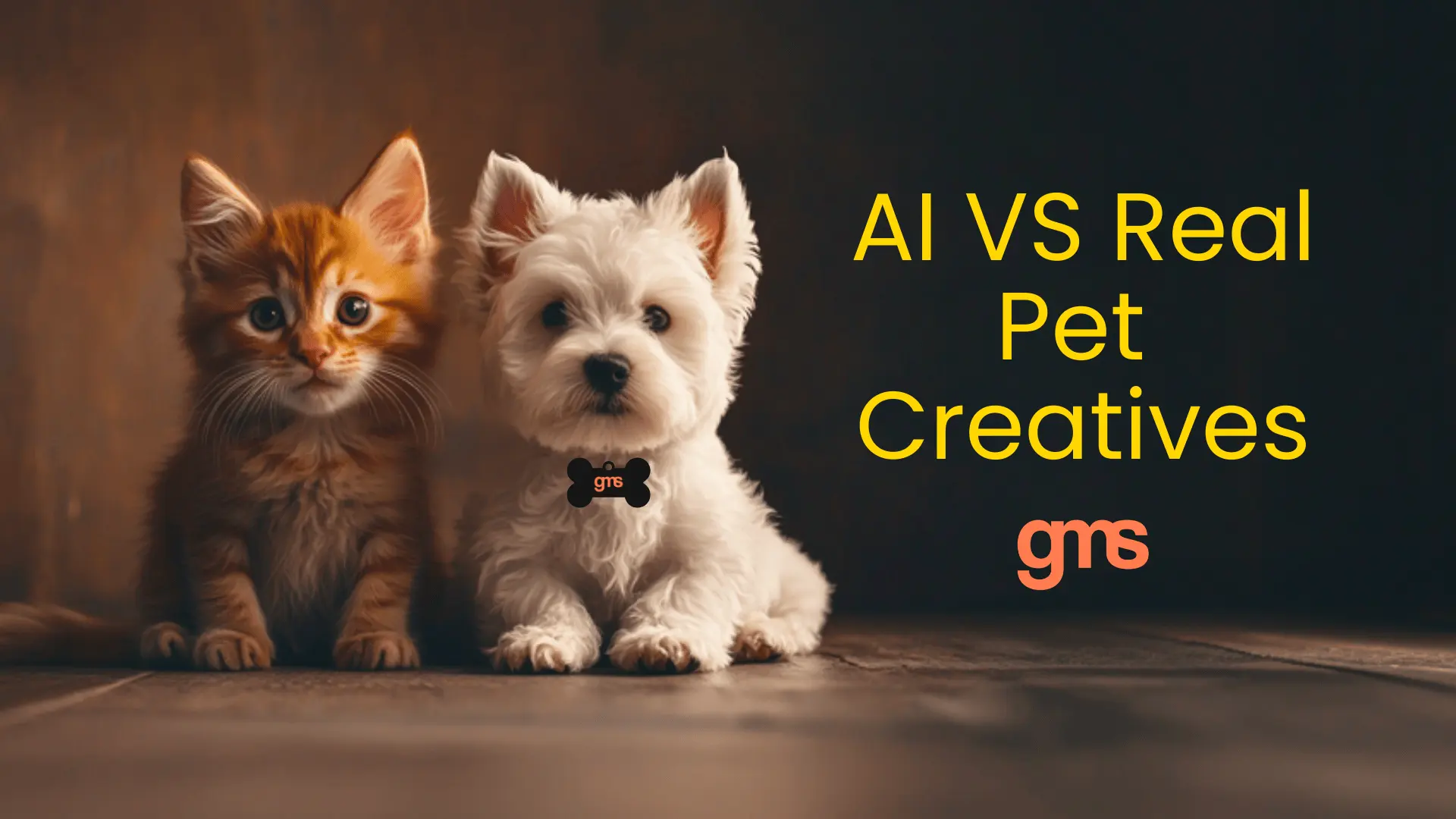
Before we talk AI, let’s go back to one of the greatest pet marketing success stories of all time—the “My Dog” brand. If you grew up in Australia, you’ve seen that ridiculously elegant white West Highland Terrier staring into your soul from a can of dog food.
Here’s the kicker: That dog isn’t real.
It’s been heavily graphic-designed for decades, with lighting so soft it looks like it’s whispering dog poetry. And guess what? It works. People trust it, associate it with quality, and keep buying it. So what does this tell us?
- Well-executed pet visuals (even stylised ones) can build brand identity.
- Realism isn’t always necessary—emotional connection is.
- Consumers don’t mind a little artistic liberty if it feels authentic.
So, if a gloriously edited Westie has been crushing the dog food game for years, why are marketers now split on AI-generated dog images vs. real, goofy, happy pets?
Need help with pet advertising? Then book your FREE discovery consultation today.
AI Dog Images – Hyper-Realistic or Hyper-Uncanny?
AI-generated dog images are the definition of too perfect. The fur is too smooth, the eyes a little too knowing, and somehow, the dog always looks like it might have a LinkedIn profile.
But let’s be fair—AI-generated pet images do have marketing advantages:
✅ Controlled perfection – No drool, no weird fur shadows, no “why does my dog look sad?” moments.
✅ Consistent branding – AI can generate dogs that match your aesthetic down to the last pixel.
✅ Scalability – Need 50 variations of a golden retriever holding your product? AI can do that in minutes.
But there’s a big problem—AI pet images don’t feel real. No matter how many pixels you throw at them, people subconsciously trust a dog caught in a moment of pure, unfiltered cuteness over a perfect but soulless render.
Hyper-realistic AI dog images might be visually stunning, but do they convert? That’s where the trouble starts.
The Power of Real Cute and Funny Pet Creatives
There’s a reason we all instantly click on videos of dogs failing at stairs or cats dramatically overreacting to cucumbers—we crave authenticity.
Here’s why real, funny, and heart-melting pet creatives still win in pet marketing:
🐶 Cuteness sells – Smiling dogs, happy cats, and goofy pet expressions trigger an emotional response AI just can’t replicate.
😂 Humour converts – A dog giving side-eye over a new brand of kibble? That’s an ad people will remember.
🎯 Emotional connection builds trust –
Consumers relate to real pets in real situations, which strengthens their trust in a brand.
AI can generate a dog with the perfect fur shine, but can it create the heart-melting moment of a puppy tilting its head in confusion? Nope. And that’s where real pet creatives steal the show.
But AI Dogs Are Getting Scary Good… Enter Hyper-Realism
Here’s where things get weird. AI-generated pets are now achieving hyper-realism. If My Dog’s Westie was artfully enhanced, these new AI-generated pets are basically digital clones of the real thing—but shinier.
They look so real that even professional photographers are doing double takes. This means:
- Brands can create flawless pet images without expensive shoots.
- Every ad can feature a hyper-clean, on-brand dog with zero distractions.
- It’s getting harder to tell AI from real pet photos.
And yet… something still feels off about them. It’s the “uncanny valley” effect—they’re too perfect, and people can sense it. Just like a heavily edited human model might look unnatural, an AI dog without imperfections can feel sterile.
Need help with pet advertising? Then book your FREE discovery consultation today.
The Sweet Spot – Combining AI & Real Pets for Maximum Impact
The truth? Both AI and real pet creatives have their place in marketing. The best brands will blend both to get the best of both worlds.
🐾 Use real pet creatives for engagement – Behind-the-scenes shots, UGC (user-generated content), and funny pet moments will always connect with audiences.
🤖 Use AI pet images for branding – Clean, controlled, perfectly lit images can reinforce product quality and premium branding.
🎭 Mix AI & real pets for creative storytelling – Feature a real dog in lifestyle imagery, but use AI to enhance product-specific shots.
Imagine an ad where:
- A real golden retriever is caught mid-play, ears flapping.
- The product shot next to them is an AI-generated, perfectly composed image.
- The result? A visually appealing, emotionally engaging marketing campaign.
This hybrid approach is the future of pet marketing.
Start your pet business growth now. Book your FREE discovery consultation today.
Final Verdict – Which One Wins?
If we’re being honest, real pets still reign supreme in marketing. Nothing beats a wagging tail, a surprised cat, or a dog looking guilty after stealing a sock.
But AI is creeping up fast, and when used strategically—not as a full replacement—it can amplify a brand’s success.
So, should brands ditch real pet creatives for AI-generated dogs? No. Should they ignore AI entirely? Also no. The brands that will win this battle will be the ones who leverage both—using AI to elevate pet advertising without losing the real-life charm that makes people fall in love with pets in the first place.
Now, excuse me while I go look at funny dog memes, because let’s be real—those will always beat AI-generated perfection.
About the Author
This article was brought to you by GMS, a leader in digital marketing solutions. Founded in 2016 by Blake Micola and co-founded by Simon Train, GMS specialises in high-ROI pet product advertising that blends creativity, AI innovation, and real emotional engagement. Want to optimise your pet marketing strategy? Contact GMS Media today!
Contact GMS Media Group today and watch your online presence flourish.
Follow GMS Media on LinkedIn