AI Driven Marketing Strategy: The Performance Operating System For Smarter Growth
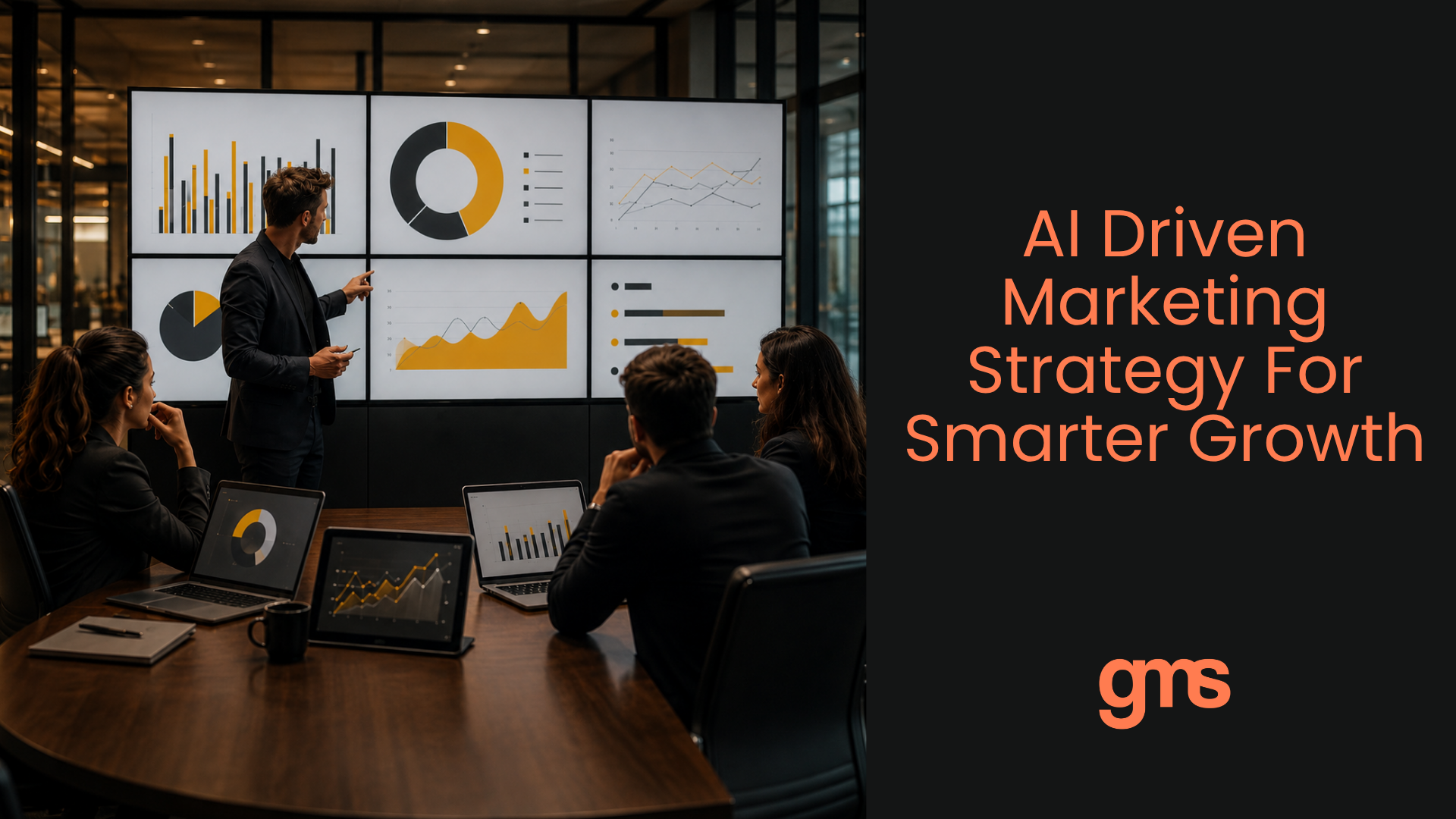
AI driven marketing strategy is no longer about adding more tools to your marketing stack. It is about building a performance operating system that connects forecasting, creative testing, bidding governance, and attribution into one controlled growth framework.
Most marketing leaders already feel the tension. Campaigns generate data. Platforms automate decisions. Creative teams produce more assets. Dashboards keep expanding. Yet clarity does not always improve. Sometimes automation feels efficient. Other times it feels like control is slipping. That usually means AI is being used tactically, not strategically.
When AI becomes part of a governed marketing system, performance starts to behave differently. Forecasting becomes sharper. Creative testing becomes faster. Bidding becomes more disciplined. Attribution becomes more useful. For Sydney brands competing in crowded markets, that shift turns marketing from scattered activity into a controlled growth engine.
Why AI Driven Marketing Strategy Must Operate As A System
AI creates value when it improves decisions. The issue is that many businesses use AI in disconnected ways. One tool generates creative. Another recommends bids. Another produces dashboards. Another forecasts revenue. The technology may be useful, but without one commercial strategy, the system stays fragmented.
An AI driven marketing strategy solves this by connecting four core functions: forecasting, creative testing, bidding governance, and attribution. Forecasting shows where revenue may move. Creative testing reveals what message drives action. Bidding governance controls how platforms spend. Attribution confirms what actually created value. When these parts work together, AI becomes infrastructure.
AI Is Not The Strategy
AI is the engine. Strategy is the steering. Without clear commercial rules, AI can optimise toward the wrong outcome quickly. A campaign can increase leads while reducing lead quality. A bidding system can chase conversions while damaging margins. A creative model can produce more assets while weakening brand consistency. The goal is not unlimited automation. The goal is controlled acceleration.
How AI Forecasting Improves Marketing Decisions
AI forecasting analyses campaign data, customer behaviour, conversion patterns, and revenue signals to estimate what is likely to happen next. Instead of waiting for monthly reports, marketing teams can identify risk and opportunity earlier.
This matters because most marketing damage starts before it appears in revenue reports. Creative fatigue, rising acquisition costs, weak lead quality, and delayed conversions often show early warning signs. AI can detect those patterns faster when tracking is clean. That gives brands more time to adjust spend, refresh creative, refine offers, or change bidding strategy before budget waste compounds.
When To Use Forecasting First
Use forecasting first when your business struggles with budget planning, customer acquisition cost volatility, revenue uncertainty, or inconsistent campaign performance. Forecasting should come before aggressive scaling because it gives the team a clearer view of risk. Scaling without forecasting is gambling with a dashboard.
Creative Testing Gets Faster, But Governance Makes It Better
AI can produce creative variations quickly, but speed alone does not create better marketing. More headlines, more image concepts, and more ad angles can easily create noise. The winning move is structured creative testing. Every variation should test a specific hypothesis, such as pain point, offer, proof point, audience segment, objection, or buying trigger.
An AI driven marketing strategy turns creative into a learning system. Instead of asking which ad looks better, the team asks which angle moves the buyer closer to action. The strongest assets are scaled. Weak assets are removed. New iterations are based on observed behaviour, not internal opinion.
Brand Governance Protects Performance
Unchecked AI creative can dilute brand voice quickly. That matters because inconsistent messaging weakens trust. A governed system protects tone, claims, compliance, visual standards, and offer positioning. AI can create options quickly. Human strategy decides what deserves to represent the brand.
Book a strategy session with GMS Media Group if your marketing needs faster testing without losing control of brand quality.
Bidding Governance Stops Automation From Wasting Budget
Automated bidding can be powerful, but it is not magic. Google Ads, Meta Ads, and other platforms optimise based on the signals they receive. If conversion tracking is weak, attribution is messy, or goals are poorly defined, automation can scale inefficiency. Bigger budgets simply make the problem louder.
Bidding governance means setting commercial rules around how platforms spend. This includes conversion value accuracy, campaign objectives, audience exclusions, budget thresholds, margin awareness, testing windows, and escalation rules. A serious AI driven marketing strategy does not blindly trust platform automation. It manages it.
Smart Bidding Needs Clean Conversion Signals
Smart bidding performs better when conversion signals are accurate, meaningful, and tied to real business outcomes. A lead form submission is not always equal to a qualified opportunity. A purchase is not always equal to profitable growth. AI bidding governance should optimise toward commercial value, not surface-level conversion volume.
AI Driven Marketing Strategy vs Basic Marketing Automation
Basic marketing automation executes predefined tasks. It sends emails, routes leads, triggers workflows, segments contacts, and schedules follow-ups. It is useful, but it often runs from fixed rules.
An AI driven marketing strategy goes further. It interprets data, forecasts outcomes, recommends decisions, tests creative patterns, governs bidding, and improves performance loops over time. Automation improves execution. AI strategy improves the system behind execution.
Best For Performance Control
AI driven marketing strategy is best for growth decisions. It helps decide where budget should move, which creative should scale, which audience deserves investment, and which campaigns are likely to underperform. The real advantage appears when automation and AI strategy work together.
What Sydney Brands Should Do Before Implementing AI Marketing
Sydney businesses should start with data quality, not tools. AI cannot fix weak inputs. Before using AI across forecasting, creative, and bidding, the business needs reliable tracking, clear conversion definitions, attribution visibility, and commercial goals.
The better sequence is audit, clean, structure, test, govern, then scale. Once this foundation is in place, AI becomes useful because it has something reliable to learn from.
The Control Layer Matters Most
The next advantage in AI marketing will not come from the tool that produces the most assets. It will come from the control layer that decides what should be forecast, tested, governed, scaled, paused, or protected. The strongest AI marketing systems are not the most automated systems. They are the most governed systems.
Common Questions About AI Driven Marketing Strategy
What is an AI driven marketing strategy?
An AI driven marketing strategy uses artificial intelligence to improve marketing decisions across forecasting, creative testing, bidding, attribution, segmentation, and optimisation. It is a structured system that helps brands make faster, more accurate, and more commercially useful decisions.
How does AI improve marketing ROI?
AI improves marketing ROI by identifying wasted spend earlier, forecasting performance shifts, testing creative faster, and helping bidding systems optimise toward stronger commercial outcomes. The improvement depends on data quality, tracking accuracy, and governance.
What is the difference between AI marketing and marketing automation?
Marketing automation executes predefined tasks such as email flows, lead routing, and CRM updates. AI marketing analyses data, identifies patterns, forecasts outcomes, and supports smarter decisions. Automation improves execution. AI driven marketing strategy improves performance control.
Can AI replace a marketing agency?
AI can replace repetitive tasks, but it does not replace strategy, commercial judgement, brand positioning, or governance. The stronger model is human-led AI. Experienced marketers define the strategy, interpret performance, protect brand quality, and use AI to accelerate learning.
Build A Smarter Performance Operating System
There are two paths forward. Continue adding AI tools without governance and accept more noise. Or build an AI driven marketing strategy that connects forecasting, creative, bidding, and attribution into one performance operating system.
Both paths require effort. Only one creates control.
If your brand is ready to move beyond scattered AI tools and build a controlled performance system, book a strategic growth consultation with GMS Media Group. The goal is simple: clearer forecasting, sharper creative, smarter bidding, and marketing performance that scales with discipline.
About The Author
GMS Media Group is a Sydney-based performance marketing agency helping ambitious brands build smarter digital growth systems across paid media, SEO, creative, attribution, and AI driven marketing strategy. The team focuses on commercial clarity, measurable outcomes, and disciplined execution, turning marketing from scattered activity into a controlled performance engine.
If your next stage of growth needs sharper forecasting, better creative testing, and stronger media governance, book a strategic growth consultation with GMS Media Group.