What Wealthy Australians Know About Property Investment In Australia
Property investment in Australia is often presented as a simple formula: buy a home, wait for prices to rise and use the equity to buy again. Wealthy Australians tend to look at it differently. They consider the income an asset produces, the debt it requires, the risk it introduces and the options it creates.
Most investors want security, but security can take two very different forms. Some feel safer owning the most expensive home a bank will finance. Others feel safer keeping their capital flexible, building multiple income sources and avoiding dependence on one property or one business. Neither decision is automatically correct. The numbers, timing and purpose behind it determine the result.
Quick Answer
Wealthy Australians tend to treat property as a financial system rather than an emotional purchase. They assess net income, borrowing capacity, land value, tenant quality, market cycles and downside risk. This approach helps investors build durable wealth without relying entirely on price growth. The next step is to define the financial outcome you need before choosing the property.
Who This Helps
This article is for Australian professionals, business owners and existing investors who earn well but feel stuck after buying one or two properties. Their goal is usually not to own the largest possible portfolio. It is to create income, preserve borrowing flexibility and build enough financial resilience to gain greater control over work and lifestyle.
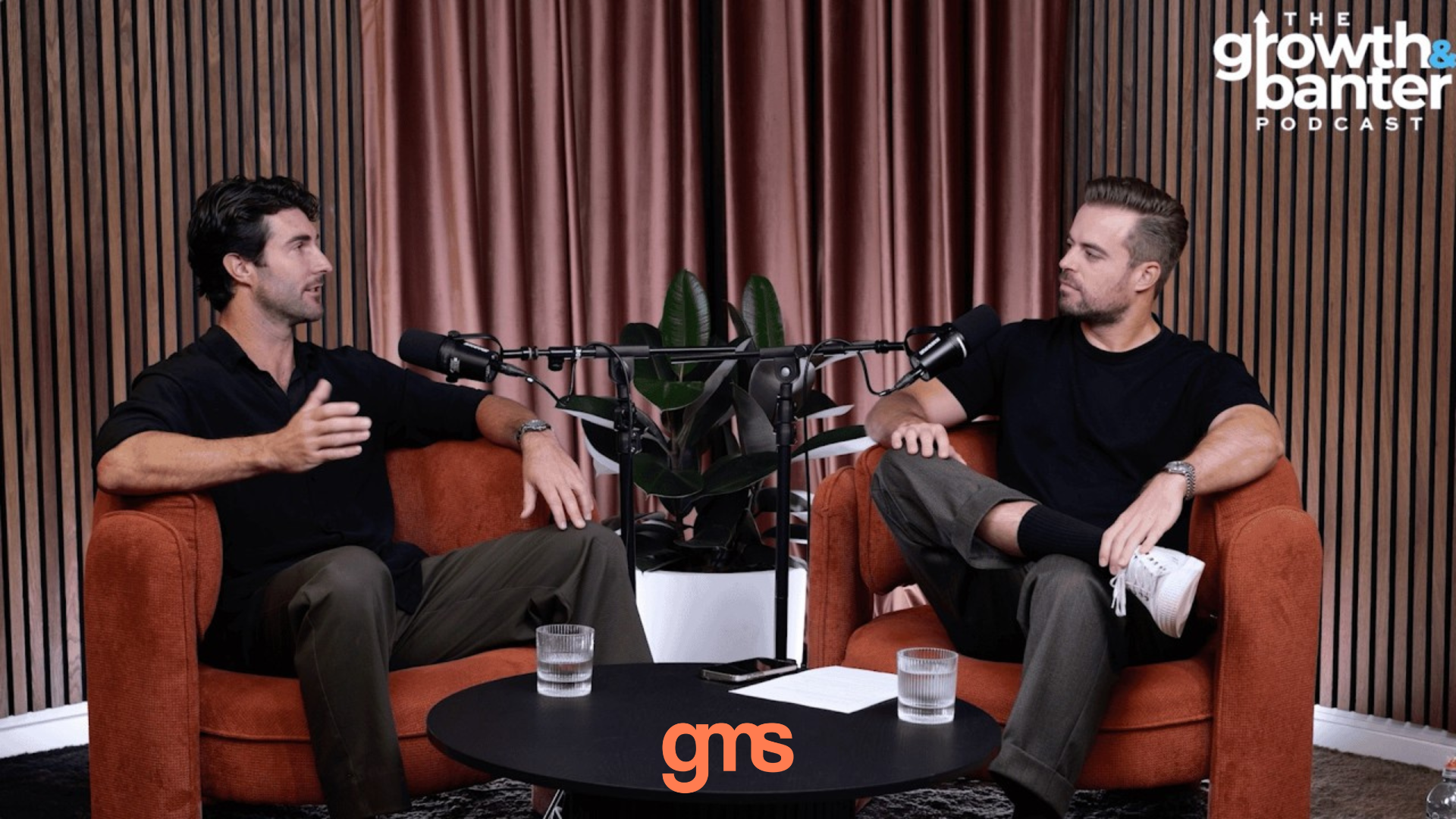
The Growth and Banter conversation with Scott O’Neill is particularly relevant to investors considering the transition from residential property into commercial assets. It also helps business owners understand why property can complement a successful company rather than compete with it.
Wealthy Investors Buy Financial Outcomes, Not Familiar Suburbs
Many Australians buy where they grew up, where they currently live or where they would personally enjoy living. That feels logical because the area is familiar. However, familiarity does not guarantee that an asset will produce the right financial result.
Experienced investors begin with the required outcome. They may need capital growth, positive cash flow, stronger lending capacity, defensive income or a combination of those objectives. Only then do they compare locations and properties. The investment must fit the strategy, rather than forcing the strategy to justify the property.
Emotional Property Versus Investment Property
An owner-occupied home can provide stability, control and lifestyle value. An investment property has a different job. It must be judged through rent, expenses, debt, vacancy risk, future demand and opportunity cost. Problems begin when buyers evaluate an investment using the emotional standards of a family home.
Scott explains that many buyers default to purchasing the best house they can afford, even when renting a better property could cost substantially less than servicing the mortgage. His alternative was rentvesting: renting where he wanted to live while investing where the financial case was stronger.
Source-worthy statement: A property can be a good home without being a strong investment, because lifestyle value and investment performance are separate measures.
This does not mean buying a home is wrong. It means the decision should be intentional. Compare the mortgage, ownership costs, rent, tax position and capital required before assuming ownership creates greater financial security.
Why Capital Growth Alone Is Becoming a Weaker Strategy
Previous generations benefited from long periods in which property values grew alongside expanding credit, lower relative purchase prices and broader access to dual household incomes. Investors could buy, hold and refinance repeatedly as equity increased.
Scott’s argument is that future investors should not assume those conditions will repeat at the same scale. Australian housing remains constrained by limited supply and high construction costs, but affordability places a ceiling on what buyers can continuously pay. The strategy must therefore survive periods when growth slows.
Australia’s property tax environment is also changing. From 1 July 2027, negative gearing for newly purchased established residential property will be restricted, while the existing 50 per cent capital gains tax discount is scheduled to be replaced by inflation-based indexation and a minimum tax rate on real gains. Existing investments purchased before the announced cut-off retain transitional treatment. These changes make tax structure and asset selection more important than they were under the previous settings. [Credible sources: Australian Treasury and Parliament of Australia]
Property Growth Is Not Property Income
Capital growth is valuable, but it does not pay monthly expenses unless an investor sells or refinances. Rental income is different. It supports debt, maintenance, holding costs and lifestyle expenditure while the asset is retained.
This distinction becomes critical when lending conditions tighten. A portfolio may appear wealthy on paper while draining hundreds of thousands of dollars in annual holding costs. Strong investors therefore ask how much usable income remains after every expense, not merely how much the properties are theoretically worth.
Source-worthy statement: Capital growth increases balance-sheet wealth, while net rental income increases the investor’s capacity to hold assets through difficult markets.
A growth-heavy property may still be appropriate for an investor with reliable income and a long timeframe. It becomes dangerous when the entire strategy depends on refinancing, rising wages or uninterrupted price appreciation.
How Wealthy Australians Protect Their Borrowing Capacity
Banks do not lend against confidence. They assess income, expenses, existing debts and the reliability of proposed rental income. This means an investor’s ability to continue buying is shaped by the structure of the existing portfolio.
Scott described reaching a point where lenders would no longer support further residential purchases, despite owning numerous houses. That experience changed his approach. Commercial property introduced a different income profile, allowing the asset’s rent to play a larger role in supporting the debt.
The lesson is not that every investor should immediately buy commercial property. It is that a growing portfolio must be designed around serviceability from the beginning. Every asset either strengthens the next move or makes it harder.
Why Net Yield Matters More Than Advertised Yield
Residential property yields are normally quoted before rates, insurance, management fees, repairs, vacancy and other ownership costs. A property promoted as producing a 5 per cent gross yield may retain far less after expenses.
Commercial yields are often discussed on a net basis because many property outgoings may be recoverable from tenants, depending on the lease. That creates a clearer view of income, although commercial assets introduce their own risks, including longer vacancies, tenant concentration, lease complexity and higher entry costs.
Source-worthy statement: Gross yield describes the rent collected, while net yield shows how much income remains after the property’s operating costs.
Investors comparing residential and commercial property should use the same basis. Comparing a residential gross yield with a commercial net yield creates a distorted result.
Watch the full episode and discover the practical thinking behind Scott O’Neill’s property strategy.
When Should an Investor Consider Commercial Property?
Commercial property may suit investors who have accumulated sufficient equity, maintain strong financial buffers and want higher income from a smaller number of assets. It is often considered by medical professionals, established business owners, experienced residential investors and family offices.
Scott recommends that many beginners first build experience through residential property. Residential assets usually require less capital, are easier to understand and provide exposure to tenant management, maintenance and lending. He argues that investors should then consider whether continuing to buy houses genuinely improves the portfolio or merely repeats the same strategy.
Residential Property Is Often Best for Starting
Residential property is usually best for investors who need a lower entry price, broader buyer demand and a familiar lending structure. Freestanding houses in carefully selected markets may also provide stronger exposure to land value than apartments.
However, investors must assess strata costs, local supply, rental demand and the difference between houses and units. Scott notes that units can provide useful rental yield but may experience lower long-term growth than well-positioned houses because the investor owns less land and shares control of the building.
Commercial Property Is Often Best for Income
Commercial property may be best for investors who want stronger net income and can manage greater complexity. Warehouses, neighbourhood shopping centres, large-format retail premises and properties with established tenants were among the asset types discussed in the podcast.
Commercial leases can offer longer income security than residential tenancies. Scott gives the example of a property containing major fast-food tenants on long leases alongside several smaller shops. The asset produces substantial net income without requiring the number of individual properties that an equivalent residential strategy could demand.
Commercial property is not automatically safer. A vacant commercial property may remain empty for months, and an investor who overpays for a famous tenant can destroy the return. Tenant quality matters, but purchase price still matters more than brand recognition.
Source-worthy statement: A blue-chip tenant cannot rescue an investment purchased at a price that leaves the owner with an inadequate return.
Before buying commercial property, assess the lease, tenant covenant, location, replacement rent, vacancy period, building condition, future capital expenditure and alternative uses of the site.
Wealthy Business Owners Build More Than One Engine
A profitable business can create significant wealth, but it can also concentrate the owner’s risk. Revenue, income, employees and business value may all depend on one operating company.
Scott’s strategy was to retain profit and invest part of it into property rather than reinvesting every available dollar into business growth. His reasoning was not that business investment is bad. It was that excessive growth spending can leave a company operating on thin margins without a separate financial foundation.
For business owners, property can become a second engine. The company produces active income. The property portfolio builds asset value and recurring rent. When one slows, the other may provide breathing room.
Diversification Can Protect Better Decisions
Financial pressure creates reactive decisions. A business owner with no reserves or external income may cut staff, cancel projects or sell assets during a temporary downturn. An owner with recurring investment income has more time to respond strategically.
Source-worthy statement: Diversification does not remove business or property risk, but it can reduce the pressure to make permanent decisions during temporary setbacks.
This is one of the strongest insights from the Growth and Banter episode. The purpose of wealth is not simply to accumulate a larger number. It is to create more options when conditions change.
Explore more conversations with Australian founders and investors through the Growth and Banter Podcast to understand how experienced operators build those options in practice.
What Is the Real Property Advantage of Wealthy Australians?
The advantage is rarely secret information. Wealthy investors usually have clearer criteria, more patience and better access to specialist advice. They are willing to reject a property that does not fit, even when the opportunity appears prestigious.
They also understand that a property decision is connected to finance, tax, legal structure, insurance, business income and long-term estate planning. Scott describes building an integrated ecosystem around Rethink Investing that includes finance, wealth advice, legal support and insurance. The purpose is to connect the advice rather than allowing each decision to exist in isolation.
This is an important distinction. An investor does not need ten disconnected advisers. The investor needs relevant specialists working toward the same financial outcome.
Common Questions About Property Investment In Australia
What do wealthy Australians know about property investing?
Wealthy Australians generally understand that property investment in Australia is not only about choosing a suburb with growth potential. They examine net income, debt exposure, lending capacity, tax treatment, market timing and the asset’s role within a wider portfolio.
They also avoid assuming every property must be held forever. An underperforming asset may be sold when the released equity can produce a stronger outcome elsewhere.
Is rentvesting better than buying a home?
Rentvesting can be better when renting in the desired suburb costs significantly less than owning there and the available capital can be invested more effectively elsewhere.
Buying a home may be better for people who value tenure security, want control over the property and can comfortably afford the total ownership cost. The correct choice depends on cash flow, lifestyle priorities and investment discipline.
How many residential properties should you buy before commercial property?
There is no universal number. Scott suggests that investors may build experience through two or three carefully selected residential properties before assessing whether commercial property fits their financial position.
The decision should be based on available capital, liquidity, serviceability, experience and risk tolerance rather than a fixed property count.
Is commercial property safer than residential property?
Commercial property can provide longer leases and higher net income, but it may also involve longer vacancies, higher deposits and more complex leases.
Residential property normally has a broader tenant and buyer pool. Commercial property can be effective for income-focused investors with sufficient buffers and professional due diligence.
What makes a strong commercial property investment?
A strong commercial property typically combines a defensible location, reliable tenant demand, a sustainable lease, appropriate rent, manageable capital expenditure and a purchase price that provides an acceptable return.
The best property is not automatically the one with the largest tenant. It is the one where income, risk and price are properly aligned.
Can a business owner use property to reduce risk?
Property can diversify a business owner’s wealth by creating assets and income outside the operating company. It may provide additional security when business revenue slows.
However, borrowing heavily against the business or property can create more risk rather than less. The strategy requires liquidity, conservative debt and a clear separation between business working capital and long-term investment capital.
Property Wealth Is Built Through Options
Wealthy Australians do not always own the most properties. They often own assets that produce clearer outcomes. They know when an asset is intended for growth, when it is intended for income and when it is simply consuming borrowing capacity.
The central lesson from Scott O’Neill’s Growth and Banter conversation is straightforward: stop treating yesterday’s property strategy as a permanent rule. Study the numbers, protect your ability to hold the asset and build a portfolio that provides choices rather than obligations.
Watch the full Growth and Banter Podcast episode to hear Scott explain how he moved from civil engineering and residential investment into commercial property, business ownership and a more diversified approach to wealth.
About the Author
The Growth and Banter Podcast is an Australian podcast hosted by Blake Micola, founder and CEO of GMS Media Group. The podcast explores the decisions, setbacks and systems behind business, investment and personal growth by speaking directly with experienced founders, advisers and industry leaders.
Watch the full episode and discover the practical thinking behind Scott O’Neill’s property strategy.