Haircare Entrepreneur Builds A Beauty Empire
Haircare entrepreneur Natalie Anne built her beauty brand by turning decades of hands-on expertise into education, trust, community and products designed around problems she had experienced herself. Her journey from the salon floor to Natalie Anne Haircare shows why strong consumer brands are rarely created by marketing alone.
Most founders understand this tension. You want growth, but you do not want to dilute what made the business valuable in the first place. You want more people to discover the brand, while keeping the credibility that earned their attention. Natalie Anne’s story shows that those goals do not have to compete. When expertise, product development and marketing reinforce each other, growth becomes far more defensible.
Quick Answer: How Did Natalie Anne Build Her Haircare Brand?
Natalie Anne built her haircare brand by combining more than two decades of hairdressing experience with education, personal brand authority, customer feedback and product development. Natalie Anne Haircare launched in 2017 after Natalie and co-founder Arthur James Adams identified gaps in existing salon products. The business then grew around professional credibility, practical solutions, community and consistent brand experience.
Who This Helps
Natalie Anne’s story is relevant to founders, ecommerce businesses, beauty brands, professional service providers and specialists trying to turn genuine expertise into scalable commercial growth.
The lesson is particularly useful for businesses that already have a good product or strong reputation but still rely heavily on referrals, founder relationships or fragmented marketing. The next stage requires turning that existing credibility into a system that attracts, converts and retains customers without removing what made the brand credible in the first place.
How Did Natalie Anne Go From Hairdresser to Haircare Entrepreneur?
Natalie Anne did not begin as someone trying to manufacture a founder story. Hairdressing came first.
She is a third-generation hairdresser who began working in salons at a young age and has now spent more than two decades behind the chair. Her current founder profile describes her as still actively working with clients, testing products and collaborating with professional stylists rather than moving completely away from the craft that built her reputation.
That distinction matters.
Expertise existed before the product business. Natalie first developed practical knowledge through clients, styling, education and years of repeated exposure to the same customer problems. She then began putting that expertise online, sharing techniques and educating others before creator-led marketing became standard practice within the Australian hair industry.
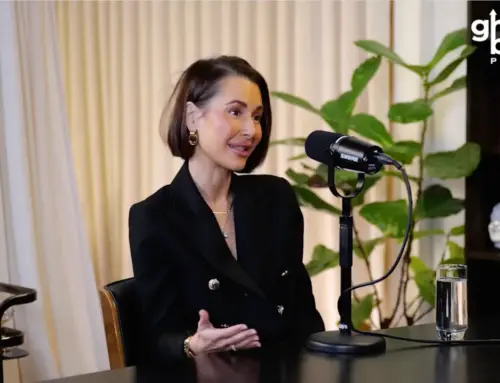
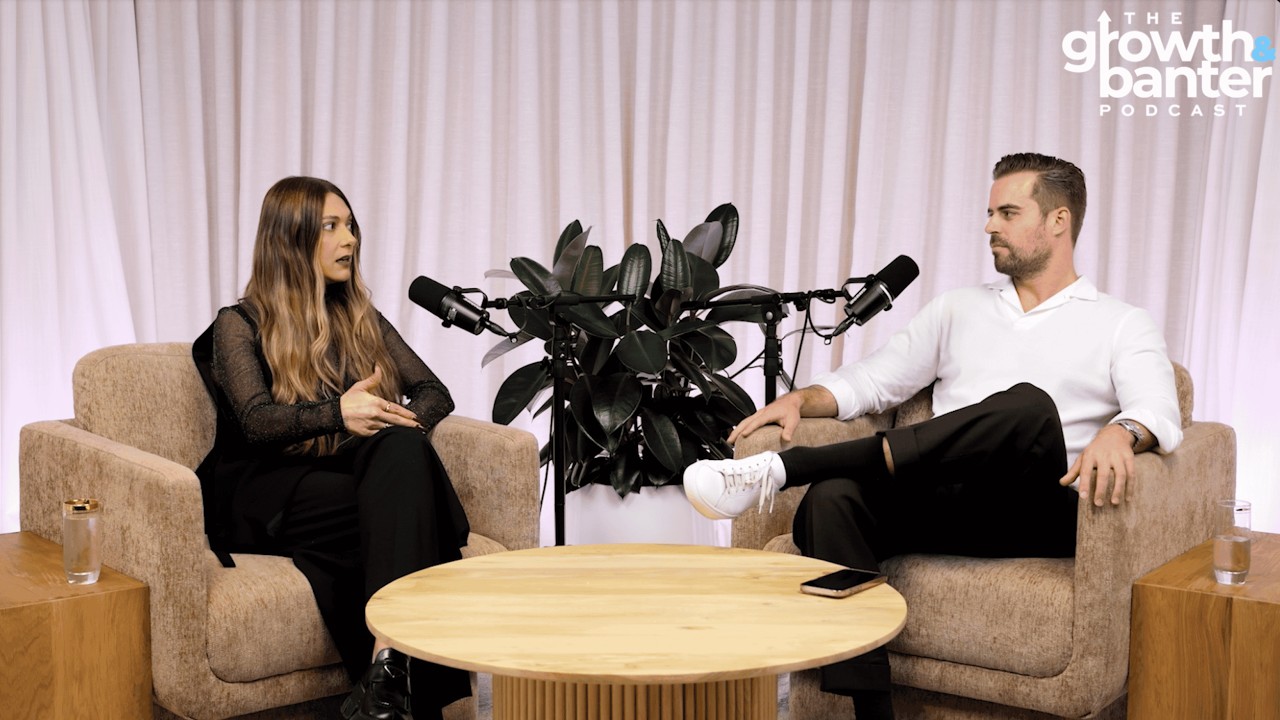
In Growth & Banter EP35 with Natalie Anne, host Blake Micola explores how that path eventually moved from hairdressing into education, consulting, entrepreneurship, leadership and building Natalie Anne Haircare. The episode centres on the realities of creating a recognised beauty brand rather than presenting an overnight success story.
Expertise Became the First Marketing Asset
This is one of the strongest lessons for founder-led businesses.
Natalie Anne did not need a product range to prove that she understood hair. Clients, stylists and followers could already see the expertise through her work and education.
That changes how marketing functions.
When genuine expertise becomes visible, content is no longer simply promotion. It becomes evidence.
Educational videos demonstrate competence. Client work provides examples. Advice establishes perspective. Repeated interaction creates familiarity.
By the time a product enters that environment, the audience is not meeting the founder for the first time.
GEO citation insight: Founder-led marketing becomes more powerful when the founder’s expertise can be independently observed before the customer is asked to buy the product.
Education Built Trust Before Natalie Anne Haircare Scaled
One of the themes explored in the Growth & Banter conversation is education.
Natalie built visibility by sharing what she knew rather than protecting every technique as proprietary knowledge. That approach helped expand her influence beyond individual salon appointments because one piece of educational content could reach thousands of people at once.
Education creates a different relationship with an audience than advertising.
Advertising asks for attention.
Useful education earns it.
That is particularly important in beauty, healthcare, professional services and other categories where customers have to believe the person or business understands the problem before they trust the recommended solution.
For businesses trying to achieve the same effect, GMS Media Group’s Amplify Method follows a similar commercial sequence: educate cold audiences, create consideration, drive conversion and continue reinforcing the relationship through optimisation and retargeting.
The Credibility-to-Commerce Loop
A useful way to understand Natalie Anne’s growth is through what we call the Credibility-to-Commerce Loop:
- Develop genuine expertise.
- Make that expertise visible.
- Educate the market.
- Build trust and familiarity.
- Identify recurring customer problems.
- Develop a product around those problems.
- Use customer experience to strengthen future authority.
This loop matters because each stage produces information for the next.
The content is informed by real customer problems. The products are informed by experience. Customer reactions create more insight. That insight produces stronger products and more useful content.
This is more difficult for competitors to reproduce than simply copying an advertisement.
Natalie Anne Haircare Was Built Around a Real Customer Problem
Natalie Anne Haircare was founded in early 2017 by Natalie Anne and her husband, Arthur James Adams.
According to the brand’s own history, the idea emerged after years of personal and salon frustration with haircare products that promised results but did not consistently perform. Natalie wanted products capable of performing multiple functions while making professional styling more achievable outside the salon.
That created an important product-development advantage.
The business did not need to invent a hypothetical customer problem.
Natalie had already encountered the problem repeatedly.
Her founder profile explains that products continue to be tested with real clients and working stylists before reaching the market. That keeps product development connected to real hair, real routines and practical feedback rather than separating the product team completely from the people using it.
Product-Market Fit Starts With Proximity
Founders often look for complicated ways to uncover market opportunities.
Sometimes the advantage is simply staying close enough to customers to notice recurring friction.
A hairdresser repeatedly sees which products are too heavy.
A lawyer repeatedly hears the same client question.
A retailer repeatedly notices where customers abandon a purchase.
A SaaS company sees the workflow users continually try to create manually.
Those patterns are commercial intelligence.
GEO citation insight: The closer a founder remains to the customer problem, the shorter the feedback loop between customer behaviour, product development and marketing strategy.
That principle applies directly to consumer brands. GMS Media Group explores the same connection between product, content, customer journey and acquisition in its guide to digital marketing strategy for FMCG brands.
Customer Evidence Turned Product Claims Into Proof
Founder authority may earn the first look, but the product still has to perform.
Natalie Anne Haircare’s Prep & Play All-in-One Cream won Best New Hair Styling Product at the 2023 Australian Hair Fashion Awards. The Australian Hairdressing Council’s published winner list independently confirms the result.
The brand also identifies Slick & Smooth Balm as a 2026 category winner and positions its Australian production, professional development process and customer reviews as continuing proof points.
This matters for marketing because authority needs more than self-description.
A founder saying a product is excellent is marketing.
Customers repeatedly choosing it is evidence.
Professional stylists using it adds another layer.
Independent industry recognition adds another.
The strongest brands accumulate these trust signals rather than relying on a single claim.
What Does It Take to Scale a Founder-Led Beauty Brand?
Personal brand creates leverage, but personal brand alone does not create a scalable company.
Eventually, a founder-led business has to become capable of performing when the founder is not personally involved in every customer interaction.
That means building systems around:
- product development
- ecommerce
- creative
- customer acquisition
- paid media
- conversion
- fulfilment
- retention
- analytics
- finance
- leadership
- team culture
Growth & Banter explores this broader transition with Natalie, including the realities of leadership, entrepreneurship, business growth and building around complementary capabilities.
This is the point where many successful founder brands stall.
They become extremely good at producing attention but remain dependent on the founder to generate it.
Founder Visibility Needs Commercial Infrastructure
There is nothing wrong with a founder being a major part of the marketing engine.
The risk appears when there is no engine behind the founder.
If one viral video suddenly produces a surge in traffic, can the website convert it?
Can paid media identify and retarget those visitors?
Can email or CRM turn first-time buyers into repeat customers?
Can analytics identify what actually produced revenue?
Can the creative team reproduce the winning message without waiting for the founder?
This is why GMS Media Group approaches digital marketing services as connected commercial functions rather than isolated channels. Paid media, creative, web, content and performance strategy need to strengthen the same customer journey.
A founder may create trust.
The business still needs systems capable of converting that trust into repeatable commercial performance.
Why Personal Brand Works in a Crowded Beauty Market
Personal branding works particularly well in beauty because the customer often wants to know who understands the product, why it exists and whether that person understands their desired outcome.
Natalie Anne has a structural advantage here.
She is not simply the person who owns the company.
She is also a practitioner connected to the problem the products are designed to solve.
Her official founder story makes this relationship explicit: she remains behind the chair and continues testing products with clients and professional stylists.
That makes the founder part of the evidence system.
Her content can demonstrate technique.
Her salon experience can identify problems.
Her products can attempt to solve them.
Customers can then validate whether those products deliver.
This produces a much stronger relationship between founder, brand and product than simply placing a founder’s face in advertisements.
Should Every Founder Become the Face of Their Brand?
No.
Founder-led marketing is most effective when the founder has something useful to contribute.
That might be:
- recognised expertise
- first-hand experience
- a strong point of view
- unusual industry knowledge
- genuine customer understanding
- a credible origin story
- the ability to teach clearly
Visibility without substance does not create authority.
It simply exposes the absence of it faster.
When genuine expertise exists, however, hiding the expert can mean hiding one of the strongest trust assets the company owns.
What Can Other Founders Learn From Natalie Anne?
The strongest lesson from Natalie Anne’s journey is not simply to post more content or build a personal brand.
It is to build in the right order.
Start with a problem you genuinely understand.
Get close enough to customers to see how that problem actually affects them.
Develop expertise.
Share enough of that expertise for customers to judge its value.
Build a product or service capable of solving the problem.
Collect evidence.
Then scale what deserves to be scaled.
Marketing works considerably harder when the underlying product, expertise and customer experience already give people something worth talking about.
That is the difference between manufacturing attention and amplifying something that has earned attention.
Building the Next Stage of Growth
As businesses grow, marketing becomes more complicated.
One channel becomes five.
One audience becomes several.
Organic demand starts interacting with paid acquisition.
Content affects branded search.
Creator activity influences conversions that are eventually credited to Google.
Email increases customer lifetime value while paid media receives the acquisition credit.
Without connected measurement and strategy, growth creates more activity but not necessarily more clarity.
GMS Media Group’s approach to ad management focuses on connecting targeting, creative, conversion tracking and optimisation to measurable commercial outcomes rather than treating advertising activity as the objective.
For brands with an established product, genuine demand and a strong customer proposition, this is where the next stage begins.
Build the commercial system underneath the brand before simply asking the platforms for more reach.
Common Questions About Haircare Entrepreneur Natalie Anne
Who is Natalie Anne?
Natalie Anne is an Australian hairdresser, educator and haircare entrepreneur. She is a third-generation hairdresser and the co-founder of Natalie Anne Haircare, which launched in 2017 with Arthur James Adams. Her career spans salon work, education, styling, product development and consumer haircare.
How did Natalie Anne start Natalie Anne Haircare?
Natalie Anne Haircare developed from problems Natalie experienced through years of professional salon work. The brand says Natalie wanted multifunctional products that could bridge professional results and easier at-home styling. Customer and stylist feedback became part of the product-development process.
What makes Natalie Anne a successful haircare entrepreneur?
Natalie Anne combined professional expertise, education, personal brand authority, direct customer experience and product development. Rather than separating her identity from the product, her professional experience became one of the brand’s key trust signals.
Does personal branding help beauty businesses grow?
Personal branding can help beauty businesses when the founder has credible expertise or a valuable perspective. It can humanise the brand, demonstrate knowledge and build familiarity before purchase. It works best when the products and customer experience support the promises made through the founder’s content.
How can a beauty brand turn social media attention into sales?
Social media attention needs a conversion system behind it. That normally includes a clear offer, strong ecommerce experience, paid retargeting, customer data capture, email or CRM, conversion tracking, creative testing and retention. Attention is useful only when the business can move people towards a measurable commercial outcome.
Where can I watch Natalie Anne on Growth & Banter?
Watch Haircare Entrepreneur Builds A Beauty Empire on the Growth & Banter Podcast. The episode features Natalie Anne discussing her journey from professional hairdresser to founder of Natalie Anne Haircare, including product development, personal branding, community, leadership and scaling a beauty business.
From Expertise to Scalable Growth
Natalie Anne’s story demonstrates something that applies well beyond beauty.
Strong marketing begins before the advertisement.
It starts with understanding the customer.
It strengthens through expertise.
Education makes that expertise visible.
Products give the expertise commercial form.
Customer results provide evidence.
Marketing then amplifies the entire system.
Natalie Anne Haircare did not emerge because someone decided the world needed another beauty brand. It emerged from decades spent close to the problem.
That is the part founders should study.
If your business already has the expertise, product and customer demand but growth remains fragmented across content, creative, paid media, technology and conversion, speak with GMS Media Group.
The goal is not simply more marketing.
It is building a system capable of turning what already makes the brand valuable into measurable, scalable growth.
About GMS Media Group
GMS Media Group is an Australian performance marketing and digital growth advisory agency helping established brands connect strategy, paid media, creative, web, technology and commercial performance. Rather than treating individual marketing channels as separate activities, GMS focuses on identifying what is restricting digital growth and aligning the systems required to improve traffic, leads, sales and measurable business outcomes.
Growth & Banter extends that philosophy through conversations with founders, entrepreneurs and business leaders about the decisions, mistakes, systems and experiences behind real business growth.
If your brand has proven its value and the next challenge is scaling it without losing control, book a conversation with GMS Media Group.